Archaeological area of Cava d’Ispica
Back to all places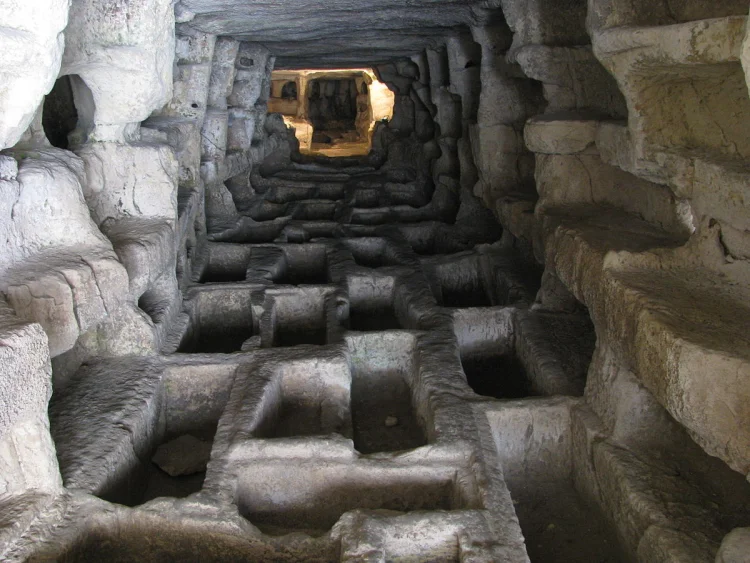
The Archaeological area of Cava d’Ispica, located in the heart of southeastern Sicily, is an exceptional site that offers a profound glimpse into ancient civilizations. This long, narrow valley extends for approximately 13 kilometers and has served human habitation from the Neolithic age through the Middle Ages. It is distinguished by its rocky facades adorned with myriad caves, many of which were utilized as dwellings, necropolises, and early Christian catacombs. Noteworthy within this expanse is the Grotta dei Santi – famed for its Byzantine frescoes that date back to the 6th and 7th centuries. Another significant feature is the Convento dei Cappuccini, a monastery carved directly into the stone, reflecting the medieval period’s monastic life.
In ancient times, Cava d’Ispica was a crucial site for the Sicel people, who predated Roman colonization. The area bears witness to various historical phases, including the Greek and Roman influences, marked by remnants of fortifications and buildings. During the Byzantine era, it continued to flourish as a refuge and religious center.
One of Cava d’Ispica’s most captivating elements is the “Larderia,” a complex of cave-like granaries that showcase ingeniously designed storage facilities, exemplifying the resourcefulness and adaptability of ancient communities.
The site’s continuity of use throughout different epochs illustrates an evolving yet continuous thread of human ingenuity and survival, making it a treasure trove for archaeologists and history enthusiasts alike.
Photo: Atossa
36.85016, 14.83793