Astronomical Clock of the Cathedral of Messina
Back to all places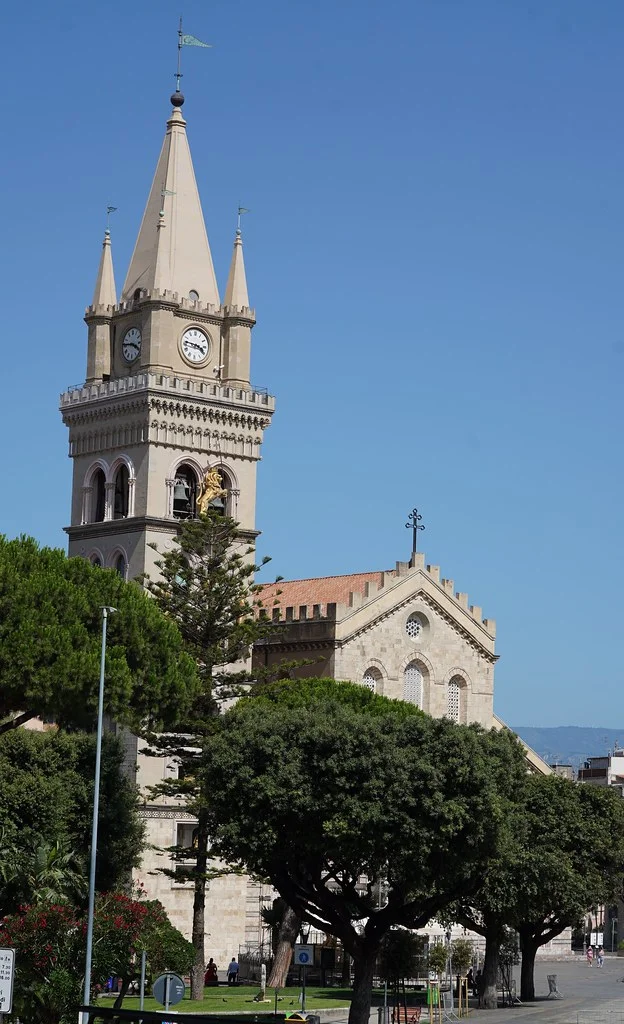
The Astronomical Clock of the Cathedral of Messina is a stunning piece of horological craftsmanship renowned for its intricate mechanical design and historical significance.
Erected in 1933 by the Ungerer Company of Strasbourg, this clock tower not only tells the time but also serves as an animated representation of Messina’s rich history and culture.
Every day at noon, the clock comes to life, showcasing a parade of figures that depict historical and religious scenes, including the crowing rooster, the Madonna blessing the citizens, and the procession of the Three Kings.
This clock was installed as part of the post-World War I restoration efforts, following the severe damage suffered by the Cathedral of Messina during the 1908 earthquake, which almost completely destroyed the city.
The astronomical features of the clock include planetary motions, lunar phases, and zodiac cycles, making it an exceptional blend of art and science. The presence of this clock reflects Messina’s resilience and its centuries-old tradition of blending innovation with a reverence for history.
The Cathedral itself, originally built in the 12th century and consecrated by King Roger II of Sicily, encompasses a variety of architectural styles due to the numerous reconstructions it has undergone, particularly after earthquakes and wartime damage.
Today, the astronomical clock remains one of the largest and most complex in the world, drawing tourists and historians alike to witness its hourly spectacle and delve into the layers of history it encapsulates.
Photo: Steve Knight
38.19233, 15.55472