Calascibetta
Back to all places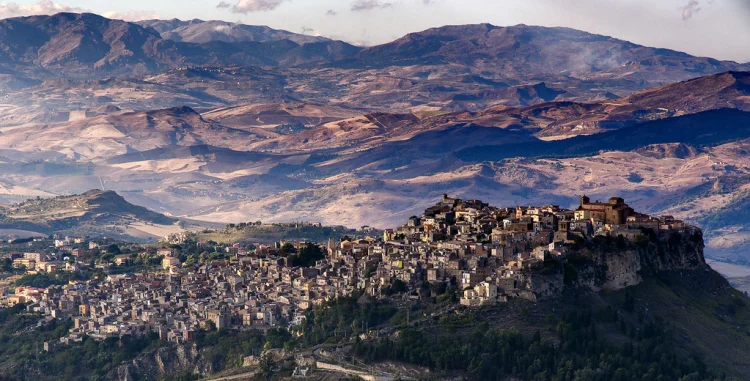
Strategically perched at 691 meters above sea level, Calascibetta stands as a testament to Sicily’s rich and multifaceted history. This ancient town, with its origins tracing back to prehistoric times, became notably significant during the medieval period under the Lombard settlement. The town’s name is derived from the Arabic ’Qalʿat-al-sabt,’ hinting at its Islamic influences when the Arabs held sway over the island.
During the Norman conquest of Sicily in the 11th century, Calascibetta gained prominence and witnessed the construction of numerous religious edifices, including the Church of San Pietro, which houses remarkable frescoes. The 13th century saw Calascibetta flourish under the Swabian rule, with the construction of the imposing Chiesa Madre, dedicated to Saint Peter and Saint Paul. In the 14th century, the town’s strategic significance was underscored during the Sicilian Vespers, a rebellion that sought to overturn Angevin rule. Later, during the Aragonese period, Calascibetta continued to thrive, contributing to the cultural and political landscape of medieval Sicily.
One of the town’s most intriguing historical assets is the Necropolis of Realmese, dating back to the Sicilian prehistory and constituting an essential archaeological site. Over the centuries, Calascibetta became a melting pot of cultures, reflecting the diverse and tumultuous history of Sicily itself.
Today, Calascibetta’s architectural heritage, narrow winding streets, and panoramic vistas continue to captivate visitors, offering an immersive journey through time.
The town’s historic center, with its well-preserved medieval buildings and significant historical sites, provides a tangible connection to the past, making it a hidden gem for history enthusiasts and cultural explorers alike.
Photo: Pasquale Paolo Cardo
37.59001, 14.27231