Catacombe dei Cappuccini
Back to all places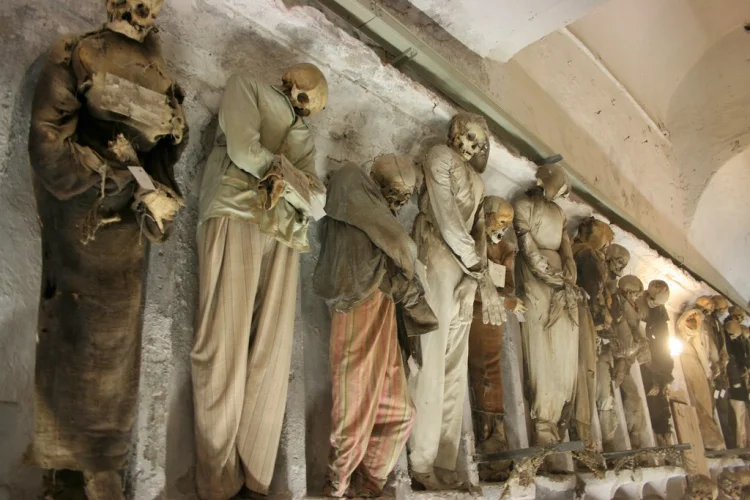
The Catacombe dei Cappuccini in Palermo, Italy, stand as a haunting yet fascinating historical site, where the mummified remains of over 8,000 people are meticulously displayed.
Located beneath the Capuchin Monastery, this extensive network of subterranean passageways dates back to the 16th century. The catacombs were originally intended as a burial site for the Capuchin monks, with the oldest mummies dating from 1599. However, over time, it became a status symbol for local nobility and prominent citizens to be interred here, resulting in a diverse collection of preserved individuals from various social classes.
The catacombs offer a unique glimpse into the past fashions and cultures of Palermo’s former inhabitants. The bodies are organized into separate corridors, such as professionals, children, priests, and men and women. One of the most famous inhabitants of the Catacombe dei Cappuccini is Rosalia Lombardo, a two-year-old girl who died in 1920. Her remarkably well-preserved body, thanks to the embalming techniques used by Alfredo Salafia, earned her the nickname "Sleeping Beauty."
Visiting the Catacombe dei Cappuccini provides a stark reflection on life, death, and preservation, capturing the attention of historians, scientists, and the general public alike. Each mummy tells a story, offering insight into the clothing, hairstyles, and personal histories of those who lived centuries ago, making it a profound destination for those interested in the intertwining of history, anthropology, and archaeology.
Photo: Juan Antonio Segal
38.11187, 13.33918