Cathedral of Piazza Armerina
Back to all places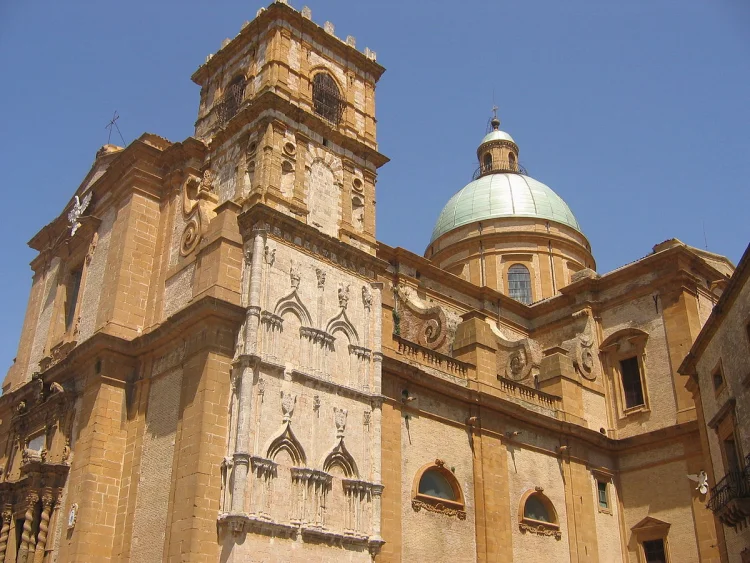
The Cathedral of Piazza Armerina, also known as the Cathedral of Maria Santissima delle Vittorie, stands as a magnificent testament to centuries of religious devotion and architectural grandeur. Nestled in the heart of Sicily, this divine structure was initially founded in the late 14th century, with significant construction activities recorded in the early 17th century under the direction of Marco Trigona, a prominent figure in the church and city history.
The cathedral’s exterior is a blend of Baroque and Renaissance styles, featuring an impressive facade adorned with intricate carvings and decorative elements that reflect the artistic prowess of its era. Notably, the cathedral’s dome, one of the largest in Sicily, showcases a perfect blend of elegance and engineering, a landmark visible from various points in the town, symbolizing spiritual refuge and historical pride. Inside, visitors are greeted by a breathtaking interior that boasts a rich collection of religious artifacts, exquisite frescoes, and ornate chapels.
One of the cathedral’s highlights is the wooden statue of Our Lady of Victories, believed to have been brought to Piazza Armerina during the Norman invasion in the 11th century. This statue not only serves as a significant religious symbol but also underscores the deep historical roots that interweave with the cultural fabric of the region.
Throughout its history, the Cathedral of Piazza Armerina has undergone several periods of restoration, most notably in the aftermath of the 1693 earthquake that devastated much of Sicily. These restorations have maintained the cathedral’s architectural integrity while incorporating elements that reflect the evolving artistic trends over the centuries.
Beyond its architectural splendor, the cathedral has been a silent witness to numerous historical events, including the vibrant medieval life of Piazza Armerina, the dominance of various ruling dynasties, and the cultural shifts that have shaped Sicily through the ages.
Today, it continues to be an active place of worship and a pivotal point of interest for historians and tourists alike, offering a window into the rich tapestry of Sicilian history and its long-standing religious heritage. For those who stand under its vaulted ceilings and gaze upon its sacred relics, the Cathedral of Piazza Armerina offers more than just a glimpse into the past; it provides an immersive journey through time, underscored by the devotion and artistry of generations long past.
Photo: commons.wikimedia.org
37.38483, 14.36383