Chiostro dei Benedettini
Back to all places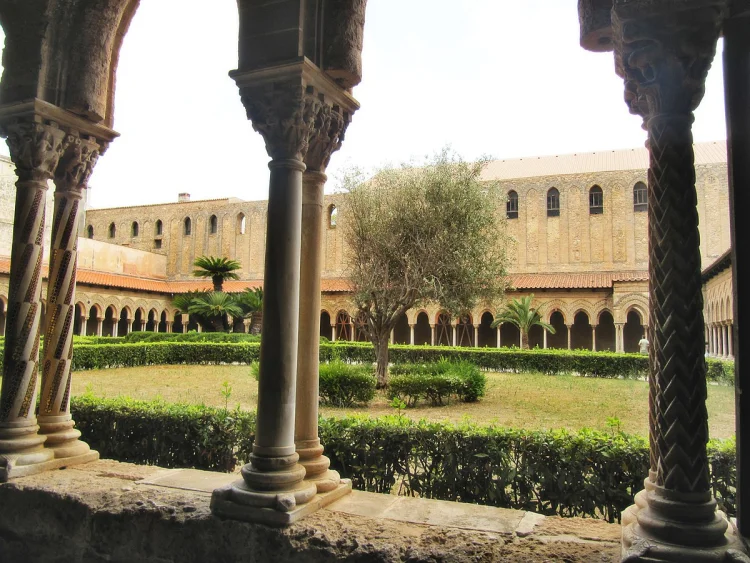
The Chiostro dei Benedettini, located in the historical heart of Monreale at Piazza Guglielmo II, is an exquisite example of medieval monastic architecture. Constructed in the late 12th century, this cloister is part of the larger Monreale Cathedral complex, which was commissioned by William II of Sicily, also known as William the Good.
The Chiostro was completed between 1174 and 1189, at the height of the Norman reign in Sicily, a period marked by the blending of Sicilian, Byzantine, and Islamic cultures.
The cloister features a perfect quadrangle of 228 intricately carved columns, each adorned with unique capitals that reflect scenes from the Bible, animal figures, and elaborate foliage. The most remarkable of these columns are those in the corner, which depict King William II being crowned by Christ and another scene showing the king presenting the Cathedral to the Virgin Mary, symbolizing the divine approval of his rule.
An outstanding feature of the cloister is the Moorish-influenced garden, originally designed for the Benedictine monks who lived here, providing a tranquil space for meditation and reflection. The garden, with its lush greenery, was a symbol of paradise and served as a private sanctuary for the monks.
The Chiostro dei Benedettini has undergone several restorations, particularly in the 19th and 20th centuries, to preserve its intricate details and historical significance. One can also observe evidence of Romanesque artistic style intertwined with Arab-Norman architecture, making this site a melting pot of different cultural influences.
Visitors to the cloister can explore the adjacent rooms, including the Chapter House, the Refectory, and a small museum featuring religious artifacts and historic items related to the Benedictine order.
In 2015, the Monreale Cathedral and its cloister were designated as UNESCO World Heritage Sites, recognizing their universal value and exceptional testimony to the cultural coexistence and artistic exchanges between Western, Byzantine, and Islamic cultures in the medieval Mediterranean world.
Photo: Palickap
38.08159, 13.29227