Church of Saint John of the Hermits
Back to all places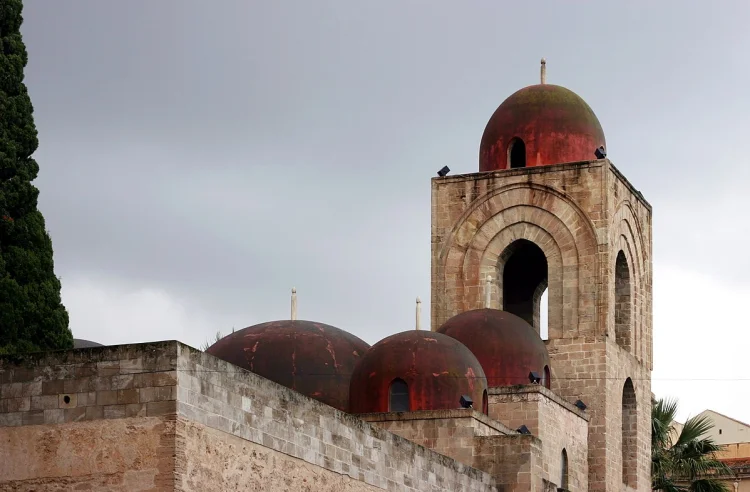
Founded in 1132 by King Roger II of Sicily, the Church of Saint John of the Hermits in Palermo stands as a remarkable example of Norman architecture infused with Arab and Byzantine influences, typical of Norman Sicily. This historic edifice is celebrated for its distinctive red domes, which starkly contrast against the lush greenery of its surrounding gardens, making it one of Palermo’s most photographed landmarks.
The architecture of the church incorporates an intriguing mix of cultural elements thanks to Sicily’s diverse historical rulers. The church’s layout encompasses a basilica plan with three apses and five red domes poised above the nave, providing a visual representation of the ecclesiastical and cultural syncretism that characterizes much of Sicilian architecture from this period.
Inside, the church holds serene cloisters and beautifully preserved frescoes that date back to its foundation. The cloisters, adorned with an array of twin columns and intertwined arches, reflect a palpable Arabic influence, while the tranquil gardens that surround them feature an array of citrus trees, which were highly prized during the medieval period. Throughout its history, the Church of Saint John of the Hermits served not just as a religious site but also as a spiritual retreat for monks seeking solitude and penance, embodying the hermitic life that St. John himself led.
By the 18th century, the church had been modified with Baroque elements, albeit few of these remain today, having been removed during restoration efforts in the 19th century to restore the church to its original Norman state.
Today, the Church of Saint John of the Hermits remains a vital part of Palermo’s historical landscape, offering scholars and visitors alike a vivid window into the Norman period of Sicilian history, showcasing the confluence of diverse cultures that have shaped the island throughout the centuries.
Photo: José Luiz
38.10963, 13.35469