Cloister Of The Cathedral
Back to all places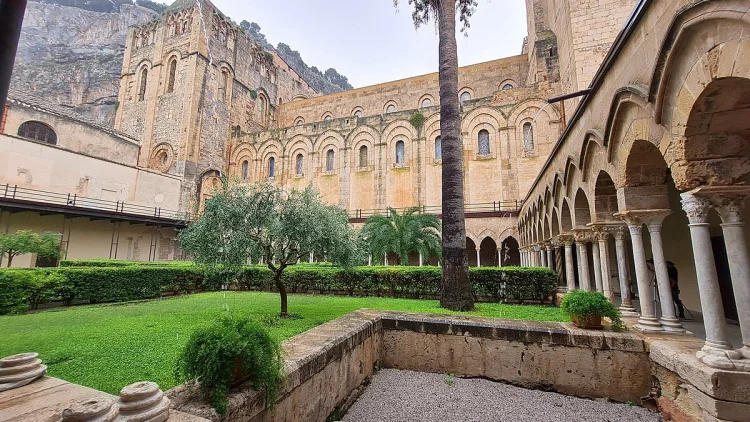
Nestled in the heart of Cefalù, the Cloister of the Cathedral stands as a testament to the architectural and historical grandeur of Sicily’s past. This cloister, part of the majestic Cefalù Cathedral, dates back to its foundation in 1131 by Roger II, the Norman King of Sicily.
The cathedral and cloister were constructed as part of an effort to establish Cefalù as a prominent center of religious power and as an expression of gratitude after Roger II survived a perilous sea voyage.
The cloister itself is characterized by its Romanesque architecture, displaying a series of intricate columns topped with various capitals depicting biblical scenes, animals, and plant motifs. The artistry in the cloister’s stonework reflects the blend of Norman, Arab, and Byzantine influences, a hallmark of Sicily’s cultural fusion during that era.
Of particular interest is a local legend suggesting that the selection of the site was directed by the Virgin Mary herself, adding an aura of mysticism to its already rich history.
Throughout the centuries, the Cloister of the Cathedral has witnessed various phases of Sicilian history, including the transition from Norman rule to the subsequent reigns of the Hohenstaufen, Angevins, and Aragonese. It survived the tumult of the Middle Ages and was meticulously preserved to maintain its historical and architectural integrity.
Visitors to the cloister today can admire the cloister garden with its tranquil atmosphere, which offers a reflective glimpse into the monastic life of medieval times. Moreover, the cloister is not only a religious and architectural landmark but also an important site for archaeological research. Excavations carried out in the 20th and 21st centuries have uncovered artifacts that shed light on the daily lives of those who lived and worked within its walls. These findings have contributed to a deeper understanding of Sicily’s multifaceted heritage.
In essence, the Cloister of the Cathedral in Cefalù is more than just a historical site; it is a living museum that encapsulates the convergence of diverse cultural influences and the enduring faith of the region. Its preservation and continued study provide invaluable insights into the rich tapestry of Sicily’s past.
Photo: Derbrauni
38.04013, 14.02345