Palazzo Corvaja
Back to all places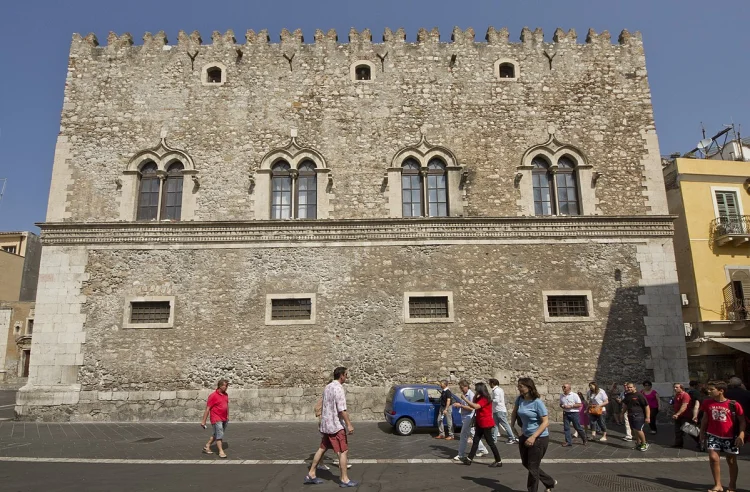
Palazzo Corvaja stands as a majestic testament to the layers of historical epochs that have adorned Taormina. Nestled in the alluring Piazza Vittorio Emanuele II, this iconic edifice traces its origins back to the 10th century.
Initially constructed as an Arab fortress during the Arab-Norman period, the palace later served as a medieval fortress following the Norman conquest of Sicily in 1078. The building’s name derives from the noble Corvaja family, who became the proprietors in the 16th century, further enriching its storied past. The architectural ensemble showcases a captivating blend of Arab, Norman, and Gothic elements, a compelling narrative of intercultural influences. The central tower is a noteworthy feature, originally part of the city’s defense system during the Arab era, and it was later integrated into the palace by the Normans. Significant modifications were made in the 14th century, during which the well-known blend of stylistic elements was accentuated.
In addition to its historical significance, Palazzo Corvaja also played a crucial civic role. It was the seat of the Sicilian Parliament in 1411, an event that underscores its importance in regional governance. The palace also housed the Women’s Hall, a unique architectural feature aimed at providing a secluded space for women during public gatherings.
In the 20th century, Palazzo Corvaja underwent extensive restoration to preserve its historical value and architectural integrity.
Today, the palace serves as a cultural and exhibition center, providing locals and visitors a glimpse into the rich tapestry of Sicilian history. From its use as a social and political hub in medieval times to its current status as a historical monument, Palazzo Corvaja remains a beacon of Taormina’s diverse and vibrant past.
Photo: trolvag
37.85390, 15.28841