Palazzo Ducezio (Municipio di Noto)
Back to all places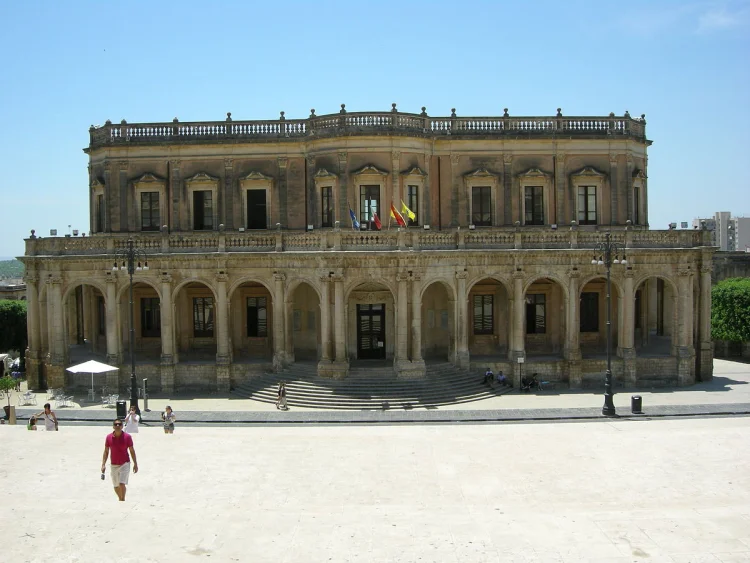
The Palazzo Ducezio, also known as the Municipality of Noto, stands as an exquisite example of Sicilian Baroque architecture.
Nestled along Corso Vittorio Emanuele, the palace was designed by the renowned architect Vincenzo Sinatra in the 18th century. The cornerstone was laid in 1746, and the building was completed in several phases over a century, with its final touches added in the early 19th century. The façade of the palace is adorned with elegant columns and arches, reflecting the opulence of the era. Inside, the palace houses the Sala degli Specchi (Hall of Mirrors), a splendid room that boasts ornate decorations and magnificent mirrors, highlighting the luxurious tastes of the period. The hall has been a witness to numerous important local government meetings and cultural events over the centuries. The building’s history is intertwined with that of Noto itself. After the catastrophic earthquake of 1693 that devastated a large part of eastern Sicily, including the original town of Noto, the new Noto was rebuilt on a different site, incorporating advanced architectural and town planning concepts of the Baroque period. This reconstruction effort included the development of the Palazzo Ducezio, which became a symbol of the city’s rebirth and resilience. In recent years, the palace has undergone extensive restoration to preserve its historical and architectural integrity. It remains a central administrative hub and a cherished landmark, attracting tourists from around the world.
The intricate stuccoes, frescoes, and the overall aesthetic grandeur of the Palazzo Ducezio continue to serve as a testament to the artistic and cultural renaissance that defined Noto in the post-earthquake period.
Photo: I, Sailko
36.89073, 15.07057