Palazzo Sclafani
Back to all places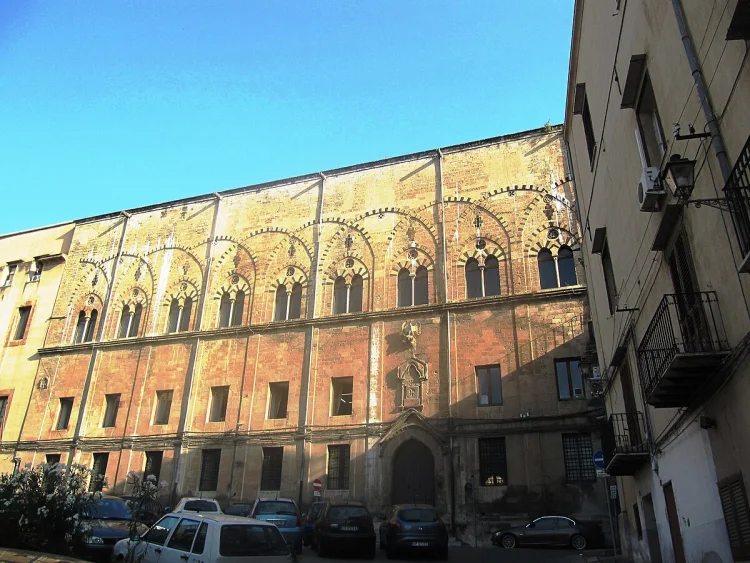
Palazzo Sclafani, a grand architectural masterpiece, is situated in the heart of Palermo, Italy. Constructed in 1330 by Matteo Sclafani, a nobleman of the time, it was built to showcase wealth and power during a period of significant political influence in Sicily.
Originally designed as a residential palace, its strategic position overlooking the ancient city allowed it to quickly transform into a powerful fortress and symbol of aristocratic might.
Throughout its history, Palazzo Sclafani has played various pivotal roles. In the late 15th century, under the reign of King Alfonso V of Aragon, it was converted into military barracks which signified the building’s transitioning role from a noble residence to a critical military asset. This adaptation underscored the strategic importance of the palazzo in securing the ruling power’s control over Palermo during bustling medieval times.
By the 16th century, the face of the Palazzo Sclafani changed dramatically as it was repurposed into a hospital, notably under the initiative of the enlightened Spanish viceroys. The transformation was aligned with a broader movement towards public health and welfare, a pioneering effort in urban and social planning of that era.
One of the most compelling aspects of Palazzo Sclafani is its architectural design, which features an eclectic blend of Norman, Gothic, and Catalan elements. The intricate facades and robust fortifications of the palace reflect the varied influences that have touched Sicily over the centuries, making it an emblem of the cultural melting pot that the island represents.
Today, Palazzo Sclafani continues to charm locals and tourists alike. As it stands adjacent to the Church of St. John of the Hermits and near the Royal Palace, it occupies a central part of Palermo’s historical landscape, inviting visitors to delve into its rich and multifaceted heritage. Its endurance through the ages stands as a testament to the layered and dynamic history of Sicily, preserving the echoes of a past filled with nobility, conquest, and innovation.
Photo: Palickap
38.11243, 13.35704