Ponte Vecchio (Ragusa)
Back to all places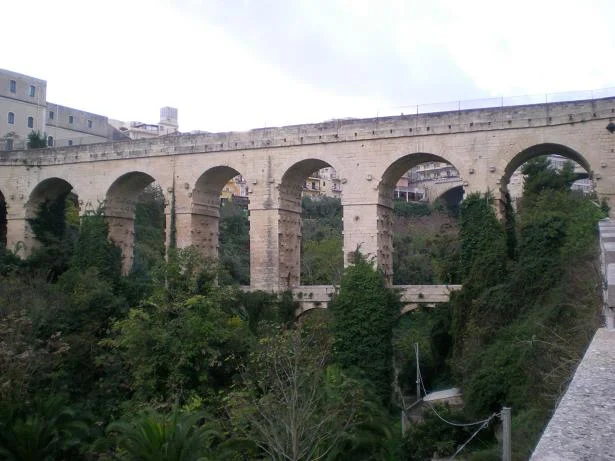
The Ponte Vecchio in Ragusa, a city situated in the heart of Sicily, stands as a remarkable testament to the architectural prowess of medieval Europe. Constructed in 1765, this historical bridge spans the gorge of the Irminio River and connects the two parts of the city: Ragusa Ibla and Ragusa Superiore.
Originally built to replace an older bridge swept away by a flood, the Ponte Vecchio has witnessed centuries of transformation within Ragusa’s landscape. The bridge, with its sturdy, ashlar masonry construction, showcases a series of elegant arches, perfectly demonstrating the engineering skills of the 18th-century architects and stonemasons.
During World War II, the bridge served as a critical route for military vehicles and supplies, embedding itself further into the annals of Ragusa’s storied past. The strategic importance of the Ponte Vecchio became evident during the liberation of Sicily by Allied forces in 1943, as it became a vital artery for advancing troops.
Surrounding the bridge, the area of Ragusa Ibla is rich in Baroque architecture, recognized as a UNESCO World Heritage site.
The proximity of the Ponte Vecchio to numerous historical landmarks, including the Cathedral of San Giorgio and the Giardino Ibleo, enhances its cultural and historical significance.
The bridge itself has been meticulously preserved and maintained, ensuring that each generation can witness its historical grandeur. Today, the Ponte Vecchio stands as both an active thoroughfare and an emblem of Ragusa’s resilience and enduring heritage. Tourists and locals alike stroll across its length, often pausing to admire the panoramic views of the valley below. It remains not only a functional piece of infrastructure but also an irreplaceable chapter in the ongoing story of Ragusa’s rich and varied history.
Photo: Sal73x
36.92301, 14.72902