Porta Reale o Ferdinandea
Back to all places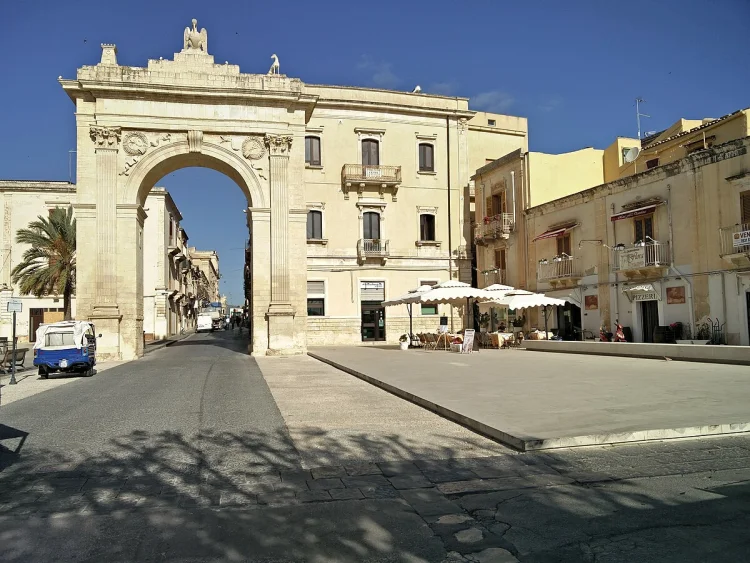
The Porta Reale o Ferdinandea, an impressive historic gateway located on Corso Vittorio Emanuele, 182, in the heart of Noto, Sicily, stands as a testament to the city’s rich architectural heritage.
Erected in 1838 to commemorate the visit of King Ferdinand II of the Two Sicilies, this monumental archway captures the neoclassical design principles of the era, blending grandeur with intricate detailing.
Constructed in the wake of the devastating 1693 earthquake, which led to the near-total reconstruction of Noto, the Porta Reale symbolizes the city’s rebirth and resilience. Designed by the renowned architect Orazio Angelini, the structure features impressive sculptures that embody symbolic representations of strength, victory, and piety. Notably, an eagle perched atop the arch signifies royal power, while a central clock underscores the passage of time and the city’s endurance through the centuries. Additionally, the gateway has witnessed significant historical moments, including the Garibaldi’s Expedition of the Thousand in 1860, which played a critical role in the unification of Italy. The structure has also been a silent observer of local and national events, reflecting the evolving sociopolitical landscape of the 19th and 20th centuries. Each stone and carving narrates tales of Noto’s vibrant history, making Porta Reale not just an architectural marvel but a symbol of Sicilian identity and perseverance.
Today, Porta Reale not only serves as a grand entrance to Noto’s Baroque splendor but also stands as a revered historical landmark, attracting visitors from around the world who are eager to delve into its storied past.
Photo: Ulissesat
36.89006, 15.07379