Roman Amphitheater of Catania
Back to all places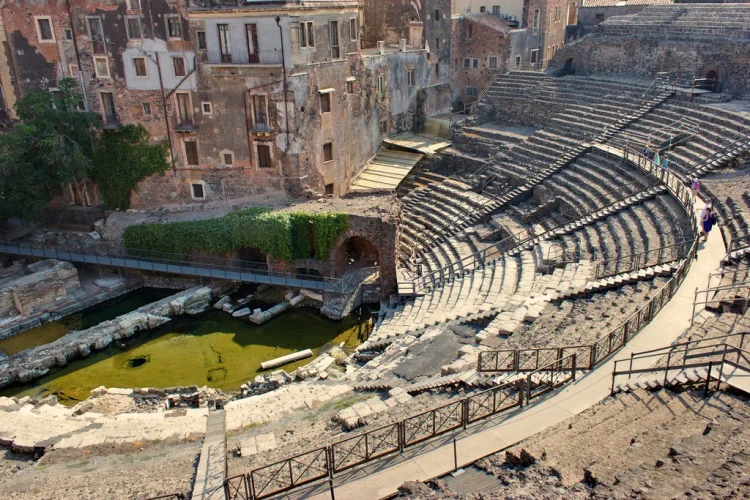
Nestled in the heart of Catania, the Roman Amphitheater is an architectural marvel that dates back to the 2nd century AD, showcasing the grandeur of ancient Roman engineering.
Constructed during the reign of Emperor Hadrian, this colossal structure is among the largest amphitheaters in Italy, second only to the Colosseum in Rome. Capable of accommodating around 15,000 spectators, it once hosted gladiatorial games, public spectacles, and dramatic performances, reflecting the vibrant cultural life of Roman Catania.
The amphitheater reflects the typical Roman architectural style, featuring elliptical tiers of seating, intricate arches, and robust stonework. It was built using local volcanic stone from Mount Etna, contributing to its resiliency through centuries. The arena’s underground tunnels, used to house gladiators and wild animals, are a testament to the sophisticated design and logistical planning of Roman architects.
Over the centuries, the amphitheater has witnessed numerous historical events. It endured the devastating earthquake of 1693, which destroyed much of Catania, and the subsequent rebuilding efforts saw parts of the amphitheater repurposed in the Baroque reconstruction of the city. In the 18th century, the central area was filled with debris and earth, preserving the lower tiers. In the 19th century, significant archaeological excavations began under the supervision of Ignazio Paternò Castello, Prince of Biscari, leading to the uncovering of this historical gem. These excavations revealed the amphitheater’s expansive scale and provided insight into the city’s Roman past. It has since undergone several restoration efforts, especially in the 20th and 21st centuries, to preserve its structural integrity and allow for public visitation.
Modern-day visitors can explore the partially preserved structure, gaining a glimpse into the lives of ancient Romans. The amphitheater stands as a significant symbol of Catania’s rich historical tapestry, blending ancient grandeur with the resilience of a city that has continuously rebuilt itself through the ages. Today, it remains a focal point of archaeological interest and a testament to the enduring legacy of the Roman Empire in Sicily.
Photo: Alexander Baxevanis
37.50739, 15.08544