Syracuse
Back to all places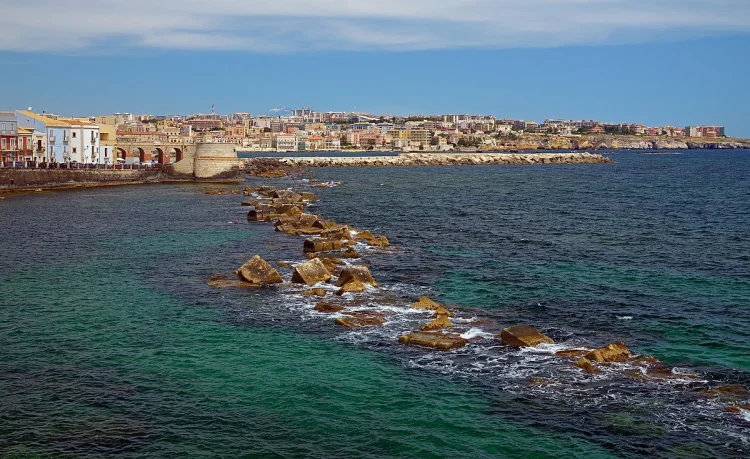
Founded in the 8th century BC by Greek settlers from Corinth, Syracuse quickly rose to prominence as one of the major powers of the ancient world. It was renowned for its rich culture, booming economy, and formidable military prowess. The city was the birthplace of the highly influential mathematician Archimedes and played a key role in wars against Carthage and Rome.
Its triumphant history is marked by the grand theaters and temples that exemplify Hellenistic architecture, particularly the well-preserved Greek Theater and the Temple of Apollo. Distinguished by its strategic location on the eastern coast of Sicily, Syracuse served as a vital hub for maritime trade routes in the Mediterranean.
The city also witnessed significant historical events such as the Athenian siege during the Peloponnesian War in the late 5th century BC. Later, under Roman rule starting in 212 BC, Syracuse flourished, becoming a pivotal part of the Roman Empire.
Notably, the Ortygia island is the historical heart of Syracuse, home to an array of archaeological wonders including the Cathedral of Syracuse, which embodies layers of history from the ancient Greek Doric temple of Athena to Byzantine and Norman influences. The city’s layered history, from its ancient Greek origins through Roman, Byzantine, Arab, and Norman periods, makes it a rich tapestry of history and culture.
Photo: Ввласенко
37.06780, 15.28802