Temple of Apollo
Back to all places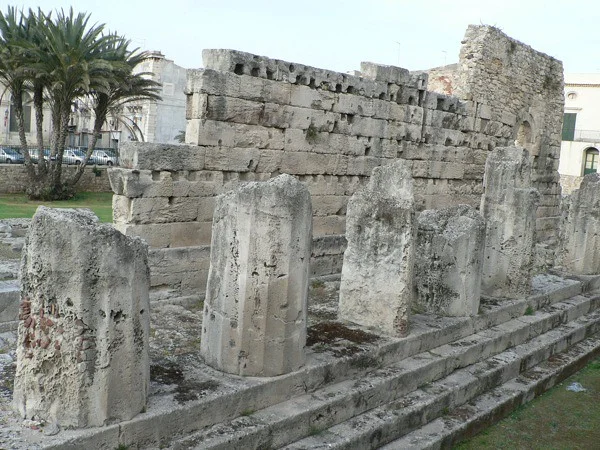
The Temple of Apollo, located in Siracusa, Italy, stands as a testament to ancient Greek architectural prowess and cultural significance. Originally constructed in the 6th century BCE, this temple is one of the earliest known Doric temples in the archaic period of Greek architecture.
Its construction marked the beginning of monumental architecture in Sicily, demonstrating advanced building techniques and artistic skill. Over the centuries, the Temple of Apollo has witnessed numerous historical events and transformations. During the Roman era, the temple underwent modifications, reflecting the Roman influence on its design and use. In the Byzantine period, it was repurposed as a Christian church, showcasing the adaptability of the structure through different eras. By the medieval period, the temple became a part of an Islamic quarter, further highlighting its enduring presence and the diverse cultures it has hosted. The Normans later integrated the site into their architectural landscape, transforming it once again. Excavations in the 19th and 20th centuries revealed the temple’s original grandeur, sparking increased interest and preservation efforts.
The site today offers glimpses into various historical epochs, from Greek antiquity to medieval transformations, allowing visitors to explore the layers of history embedded in its ruins. The Temple of Apollo not only serves as an important archaeological site but also as a symbol of the rich and complex history of Siracusa, contributing to our understanding of ancient civilizations and their lasting legacies.
Photo: reziemba
37.06388, 15.29304