Temple of Concordia
Back to all places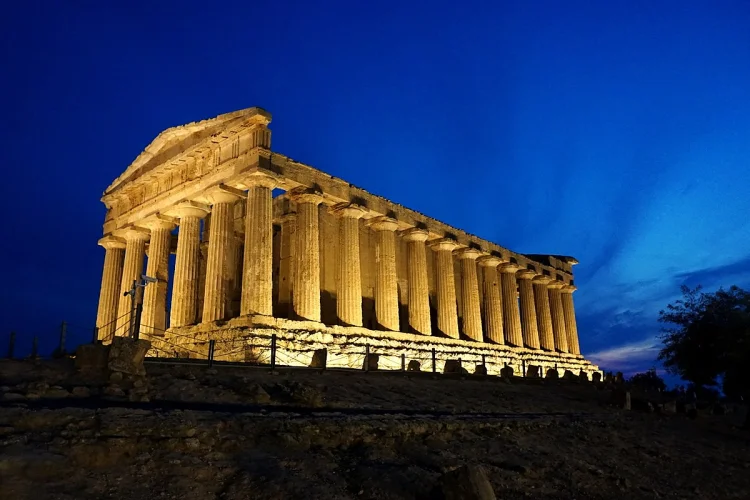
Constructed in 440 BC, the Temple of Concordia is an exceptional example of ancient Greek architecture located within the Valley of the Temples in Agrigento, Italy. Its name, "Concordia," suggests a dedication to the Roman goddess of harmony, although the exact deity it was originally devoted to remains uncertain. The temple is one of the best-preserved Doric temples in the world, reflecting the wealth and power of the ancient city of Akragas, a significant cultural hub in Magna Graecia.
Standing majestically on a rocky plateau, the temple is a testament to classical Doric design with a peripteral layout, comprising six columns on its short sides and thirteen on the long sides. The structure’s harmony and proportional elegance illustrate the architectural brilliance of its creators.
During its peak, the Temple of Concordia was likely adorned with vibrant polychrome details and statues, which have long since faded or been lost to time. Historical records indicate that in the 6th century AD, the temple was converted into a Christian basilica by Bishop Gregory of Agrigento, which contributed to its preservation through the Byzantine period and beyond. This transformation included modifications such as the closing of the colonnade and the addition of two apses. Despite these changes, the essential elements of the original Greek temple are remarkably intact. In the 18th century, the temple attracted the attention of European travelers and scholars as part of the Grand Tour, leading to renewed interest in Greek and Roman antiquities.
Today, the Temple of Concordia is a UNESCO World Heritage site, recognized not only for its historical and architectural significance but also as a symbol of cultural and religious transformation over millennia. The continued conservation efforts ensure that this ancient marvel remains a connection to our past and a wonder for future generations to admire.
Photo: Erik Albers
37.28966, 13.59208