Temple of Segesta
Back to all places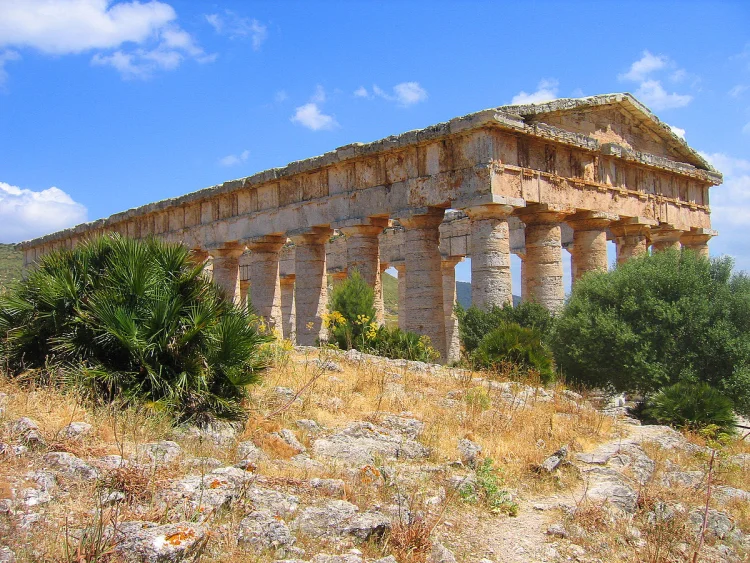
Nestled in the serene hills of northwestern Sicily, the Temple of Segesta stands as an enduring testament to the architectural prowess and cultural aspirations of the Elymian people. Constructed in the late 5th century BCE, this Doric temple is renowned for its remarkably preserved structure, which has captivated historians and travelers alike for centuries. Though never completed—evident in its unfinished columns and the lack of a pronaos and cella—it remains a striking example of Greek influence on local populations.
Segesta itself was a significant player in regional politics, often embroiled in conflicts with its rival city, Selinunte. This rivalry culminated in the dramatic events of the Peloponnesian War, when Segesta sought assistance from Athens, leading to the ill-fated Sicilian Expedition. The temple may well have been part of an ambitious civic project to reflect Segesta’s prosperity and garner divine favor during these tumultuous times. During the Roman era, Segesta continued to play a prominent role but gradually declined in the following centuries.
Over the millennia, the temple has witnessed numerous phases of occupation, including the Byzantine and Arab periods, each adding layers to its historical narrative.
Today, visitors can walk the ancient path to this partially completed marvel, experiencing firsthand the silent stories of ambition, conflict, and resilience—etched in stone for eternity
Photo: Guido Radig
37.94142, 12.83238