Via Crociferi
Back to all places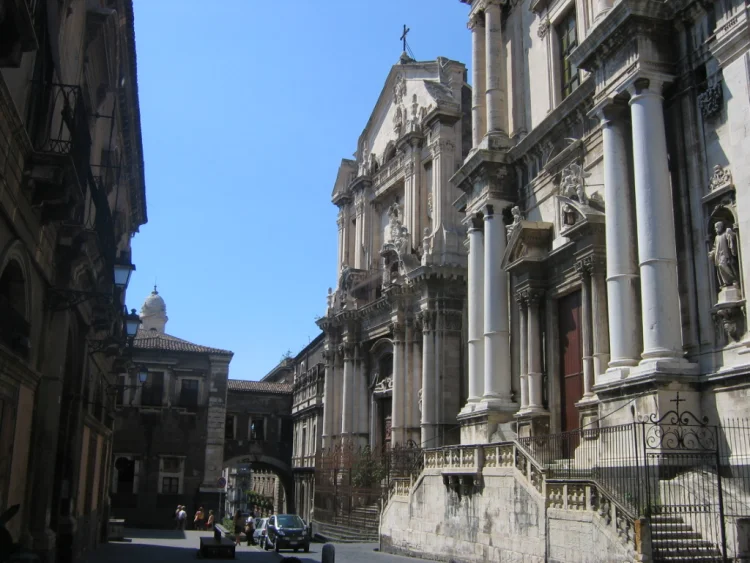
Via Crociferi in Catania, Italy, is a historic street renowned for its stunning baroque architecture, reflective of the city’s rich cultural and architectural heritage.
This iconic street, lined with impressive buildings, was constructed in the early 18th century following the devastating earthquake of 1693 that resulted in widespread destruction throughout Catania.
Notable landmarks that grace Via Crociferi include the Church of San Benedetto, famous for its magnificent façade and picturesque arched bridge, and the Church of San Francesco Borgia, which showcases intricate baroque details and an opulent interior. Via Crociferi is also home to the Church of San Giuliano, regarded as one of the finest examples of Sicilian baroque architecture, featuring a beautiful curved façade and an elegant dome.
Another significant structure is the Jesuit College, which has contributed to the intellectual and cultural life of Catania since its establishment.
The street frequently serves as a backdrop for religious processions, especially during the Feast of Saint Agatha, Catania’s patron saint, making it a vital part of the city’s spiritual life.
Via Crociferi’s historical significance extends to its role in social and political spheres throughout the centuries, hosting various notable events and figures in Sicilian history. Walking along this street is like traveling through a living museum, where each building and corner holds a piece of Catania’s storied past. Restoration efforts have preserved its baroque allure, inviting visitors to explore and admire the artistry and history embedded in its stones.
Photo: Urban
37.50444, 15.08482