Villa Giulia
Back to all places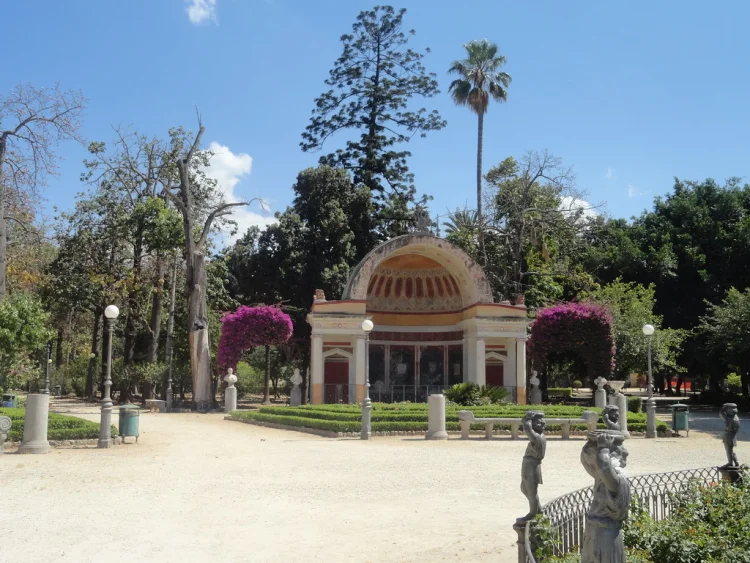
Villa Giulia, also known as Villa Florio, graces Palermo, Italy, with its remarkable history and stunning architecture. Designed and built in the 18th century, specifically in 1777, under the auspices of the viceroy Marcantonio Colonna, it was named in honor of his wife, Giulia. Known for its elegant Neoclassical style, the villa was initially conceived as a public space dedicated to the joy and leisure of the townspeople, a novel idea at the time.
The villa is surrounded by lavish gardens, intricately planned and adorned with a plethora of sculptures, fountains, and walkways, making it a jewel of landscape architecture. The standout features include a charming "labyrinth" and a striking neoclassical Temple dedicated to the Sun, which celebrates the influence of classical mythology on art and culture during the time.
Over the centuries, Villa Giulia has witnessed various historical events and has served multiple purposes. It was especially significant during the unification of Italy in the 19th century and underwent numerous modifications and restorations that reflect the stylistic and cultural shifts of successive periods.
Today, Villa Giulia stands as a testament to Sicilian history and culture, attracting visitors with its serene environment and beautiful vistas. It remains a beloved gathering place for locals and a fascinating attraction for history enthusiasts, offering a glimpse into the rich tapestry of Palermo’s past.
Photo: Veselina Dzhingarova
38.11353, 13.37565