Zisa Palace
Back to all places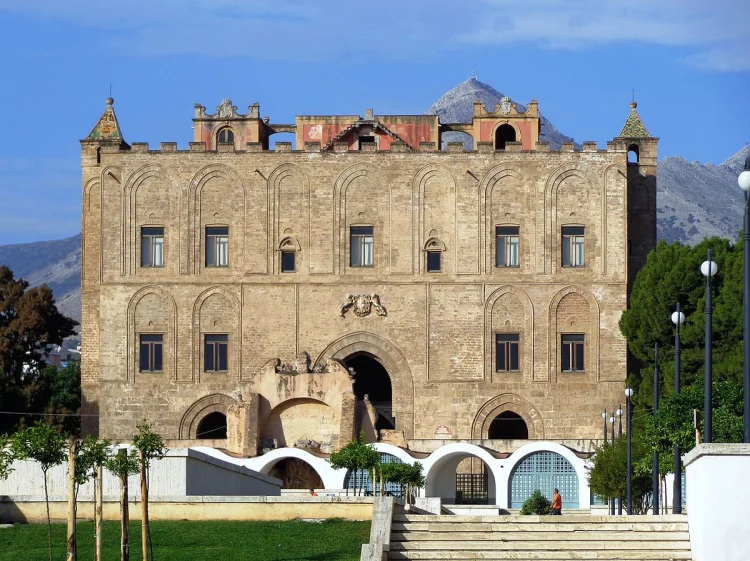
Originally constructed in the 12th century under the commission of William I of Sicily, Zisa Palace stands as a monumental testament to the rich cultural confluence of Norman and Islamic architectural styles, characteristic of Sicily’s eclectic historical fabric.
The palace’s name, "Zisa," is derived from the Arabic term "al-Azīz," meaning "the splendid." This majestic building, now located in Piazza Zisa, Palermo, was meticulously designed to embody the opulence and sophistication of the royal court during its heyday.
The architecture of Zisa Palace is an exemplar of Arab-Norman style, showcasing the harmonious blend of Arabic decorative motifs and Norman construction techniques. The structure is famed for its enchanting Soffione, a muqarnas ceiling in the central hall, which epitomizes the artistic craftsmanship of the era. Additionally, the building featured an ingenious water system, including a series of pools and fountains, mirroring the Islamic paradisiacal garden themes, which not only added to the aesthetic appeal but also functioned to cool the interiors.
Throughout its long history, the palace has witnessed numerous alterations and renovations, particularly evident during the 14th century when it was adapted to the changing tastes and requirements of its occupants. After falling into disrepair, comprehensive restoration efforts commenced in the 20th century, aimed at reviving the grandeur of its original design while preserving its historical integrity.
Today, Zisa Palace serves not only as a museum that offers a glimpse into the regal lifestyle of the past but also as a cultural hub that celebrates the diverse historical influences that have shaped Sicily. It stands as an enduring symbol of the island’s rich heritage and continues to captivate historians, architects, and tourists alike with its historical richness and architectural beauty.
Photo: Effems
38.11675, 13.34100